
"Your land is only as secure as the record that proves it."
Every mutation, every fard, every girdawari — decoded.
The land you own is only as real as the record that names you.
Four procedures. Dozens of documents. One patwari who has seen it all. This guide decodes every step — from the simplest Fard to the most contested mutation — before you walk through that compound gate.
Download Complete Checklist PDF4
Procedures
35+
Documents mapped
18
Audit risks explained
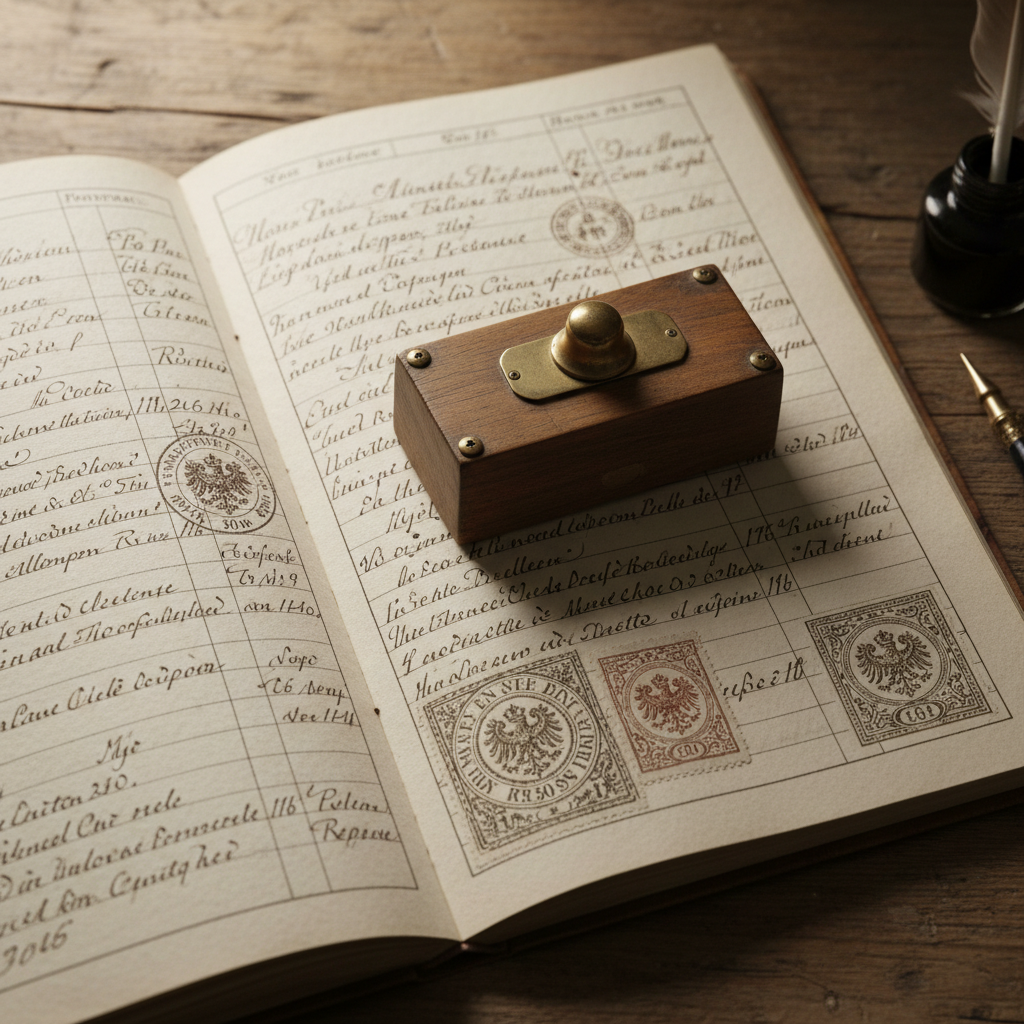
The Jamabandi is updated every 4 years. Your rights are only as current as the last entry.
Khasra No. identifies a field. Khata No. identifies an owner. Khewat No. identifies a co-ownership group. Know all three before you enter the patwari's office.
How to use this guide
Each section below covers one revenue procedure. On the left, you will find an interactive checklist of every document, form, and fee you need. Tick items off as you gather them. On the right, the audit panel shows you exactly what can go wrong — and how far it can escalate.
The procedures are ordered from simplest to most complex. If you are visiting the tehsil for the first time, read all four before you go. The document you forget at home is always the one the patwari asks for first.
Interactive checklists
Tick off documents as you gather them
Audit risk panels
What goes wrong at each step
Escalation paths
Patwari → Kanungo → Tehsildar → Court
Downloadable PDF
All four checklists in one printable file
Intiqal / Mutation after Inheritance
When the original owner dies, the land record must be updated to reflect the legal heirs. This is the single most contested procedure in any tehsil — do it wrong and the dispute outlives you.
Issued by Municipal Committee or Gram Panchayat — must be notarised if more than 6 months old.
Obtain from patwari or online Jamabandi portal. Must show deceased as owner.
Issued by Tehsildar. All living heirs must be named. Takes 15–30 days — apply early.
Declaring you are the legal heir and no dispute exists. Must be notarised.
Available free at patwari office or state revenue portal.
If any heir is absent or overseas, a notarised NOC is mandatory.
Required only if there is an existing revenue court case on the property.
What Can Go Wrong
Missing heir listed in Jamabandi
High RiskIf the Jamabandi shows a co-owner who is not included in your Legal Heir Certificate, the patwari will reject the application outright and ask for a fresh LHC.
Escalation: Revenue court if patwari refuses to accept corrected documents
Objection period (30 days)
High RiskAfter mutation is entered, a 30-day objection window opens. Any relative can file an objection and freeze the mutation. The Tehsildar then conducts a hearing.
Escalation: Tehsildar hearing → Revenue Commissioner if unsatisfied
Patwari fee demand (unofficial)
Watch OutPatwaris sometimes delay mutation processing until an informal facilitation fee is paid. Document every visit with date, time, and the name of the official you spoke to.
NRI heir complications
Watch OutIf any heir is abroad, their NOC must be apostilled and authenticated by the Indian embassy. A plain notarised document from a foreign notary is NOT accepted.
Escalation: Tehsildar has discretion to accept — get written confirmation before proceeding
Patwari's Desk Tip
Always carry photocopies of every document. The original stays in your hand until the receiving clerk signs the acknowledgement slip. Never leave originals unattended.
Obtaining Fard / Jamabandi Copy
A Fard is the certified extract of the Jamabandi register — the foundational document for any property transaction, loan, or legal proceeding. Sounds simple. It is not always.
Find this on any previous document, Aadhaar-linked land record, or ask the patwari by village name + owner name.
The khewat number identifies the ownership unit. Essential for the patwari to locate the entry.
Varies by state. Punjab: ₹10/page. UP: ₹15/page. Haryana: ₹20/page.
Not always required but carry Aadhaar. Some patwaris insist on it.
What Can Go Wrong
Fard shows old mutation not updated
High RiskIf a mutation happened recently but the Jamabandi cycle has not been updated, the Fard will show the old owner. You need a certified copy of the mutation order, not just the Fard.
Online Fard vs. patwari-certified Fard
Watch OutMany courts and banks now accept online Fards (Jamabandi portal). However, some revenue courts and loan applications specifically require the patwari-stamped physical copy. Confirm before you go.
Fard shows encumbrance / karz
High RiskIf the Jamabandi shows a lien, mortgage, or court attachment (karz/rahan), the property cannot be freely sold or transferred until the encumbrance is lifted.
Escalation: Civil court to lift attachment, or bank to issue NOC if loan repaid
Patwari's Desk Tip
Always carry photocopies of every document. The original stays in your hand until the receiving clerk signs the acknowledgement slip. Never leave originals unattended.
Khasra Entry Correction
When the field book shows the wrong owner name, wrong area, or wrong crop entry — and it has been wrong for years — correcting it is a bureaucratic marathon that tests patience.
The document that proves the correct entry. Without this, no correction is possible.
You need the erroneous entry on record to formally dispute it.
On ₹100 stamp paper. Describe exactly what is wrong and what the correct entry should be.
Patwari may require neighbours to confirm land boundaries and ownership. Arrange in advance.
Older records showing the correct entry strengthen your case considerably.
If the patwari does not act within 30 days, escalate to the Tehsildar with a written complaint.
If the matter goes to revenue court, a court fee stamp is required on the petition.
What Can Go Wrong
Patwari refuses to acknowledge the error
High RiskA patwari who made the original error may refuse to correct it to avoid accountability. File a written complaint with the Kanungo, who supervises patwaris.
Escalation: Kanungo → Tehsildar → Revenue Commissioner
Third party has built on the mis-entered land
High RiskIf someone else has been cultivating or building on land incorrectly entered in their name, correcting the Khasra will not automatically remove them. You will need a civil court order.
Escalation: Civil court injunction + revenue correction proceeding simultaneously
Girdawari cycle timing
Watch OutKhasra Girdawari is updated twice yearly (Rabi and Kharif seasons). Corrections made outside the cycle may not appear until the next update — leaving a gap period of 6 months.
Area discrepancy between deed and Khasra
Watch OutIf your sale deed shows 5 kanals but the Khasra shows 4 kanals 12 marlas, a fresh field measurement (girdawari) by the patwari is required. This can take months to schedule.
Escalation: Formal measurement request to Kanungo with written application
Patwari's Desk Tip
Always carry photocopies of every document. The original stays in your hand until the receiving clerk signs the acknowledgement slip. Never leave originals unattended.
Agricultural Land Conversion (CLU)
Converting agricultural land to residential, commercial, or industrial use requires Change of Land Use (CLU) permission — one of the most document-intensive processes in Indian revenue law.
Form varies by state. Punjab: Form A under Punjab Apartment and Property Regulation Act.
Must show plot boundaries, approach road, existing structures. Certified by registered architect.
All four sides of the plot. If any side adjoins a public road or canal, NOC from PWD or Irrigation Dept.
Confirms land is not classified as highly productive / protected agricultural zone.
Calculated on plot area × collector rate. Can be very significant for large plots.
Proves no mortgage or legal dispute on the property during the application period.
Increasingly required to prove land is not already under construction.
What Can Go Wrong
Land falls under protected agricultural zone
High RiskCertain categories of agricultural land — particularly land near rivers, canal heads, or classified as highly fertile — cannot be converted under any circumstances. Verify classification before applying.
Escalation: No appeal — classification is statutory. Consult revenue lawyer before purchase.
Conversion charges calculated at circle rate, not purchase price
Watch OutThe state calculates conversion charges on the collector's circle rate, which may be far higher than what you paid. Budget for this before starting the process.
Neighbour NOC refusal
High RiskAny adjoining owner can refuse to give NOC and effectively block your CLU application. In such cases, the Tehsildar must conduct a field enquiry — which can take 6–12 months.
Escalation: Tehsildar field inquiry → DC discretion to override in some states
Town planning violations discovered during review
High RiskIf any existing structure on the plot violates building bylaws, the CLU application is frozen until the violation is compounded or demolished. This frequently surprises applicants.
Escalation: Municipal/Town Planning authority compounding process
Missing from master plan / development plan
Watch OutLand not included in the approved master plan may not be eligible for certain commercial or industrial uses regardless of CLU approval.
Escalation: Town Planning Department for plan amendment — multi-year process
Patwari's Desk Tip
Always carry photocopies of every document. The original stays in your hand until the receiving clerk signs the acknowledgement slip. Never leave originals unattended.
The Complete Tehsil Procedure Guide
A printable PDF compiling all four checklists, district-specific fee schedules, escalation flowcharts, and a glossary of revenue terminology — everything you have been screenshotting from this page, in one document.
Get your copy
Tell us your district so we can include the correct fee schedule. No account required.
Check Your Land Record Status
Every state in India now maintains an online land records portal. You can verify ownership, check for encumbrances, and download a Fard without visiting the patwari's office — though the patwari-certified copy is still required for most legal proceedings.
Use the portal to verify the record before you file any application. If the online record differs from your physical documents, resolve the discrepancy first.
Punjab
jamabandi.punjab.gov.in
Fard, mutation status, girdawari
Haryana
jamabandi.nic.in
Jamabandi, mutation, nakal
Uttar Pradesh
upbhulekh.gov.in
Khatauni, Khasra, nakal
Rajasthan
apnakhata.raj.nic.in
E-Dharti, Jamabandi nakal
How to Read the Result
Khewat / Ownership Register
Shows who owns the land and in what share. If your name is not here, you do not legally own it — regardless of what any sale agreement says.
Khatauni / Cultivation Register
Shows who is actually cultivating the land. This may differ from the owner. A tenant's name here does not mean they own the land.
Khasra Girdawari
The field-by-field crop and possession record updated twice yearly. If someone else's name appears here, they may have adverse possession rights after 12 years.
Remarks / Notes column
Any court attachment, mortgage, government acquisition notice, or dispute annotation appears here. A clean remarks column is essential before purchase.
By the time you reach this line, you know more than most people who walk into a tehsil.
Take the checklist with you. The patwari respects preparation.
Download the Complete Tehsil Checklist